Small Garden Design Tips That Make a Big Difference
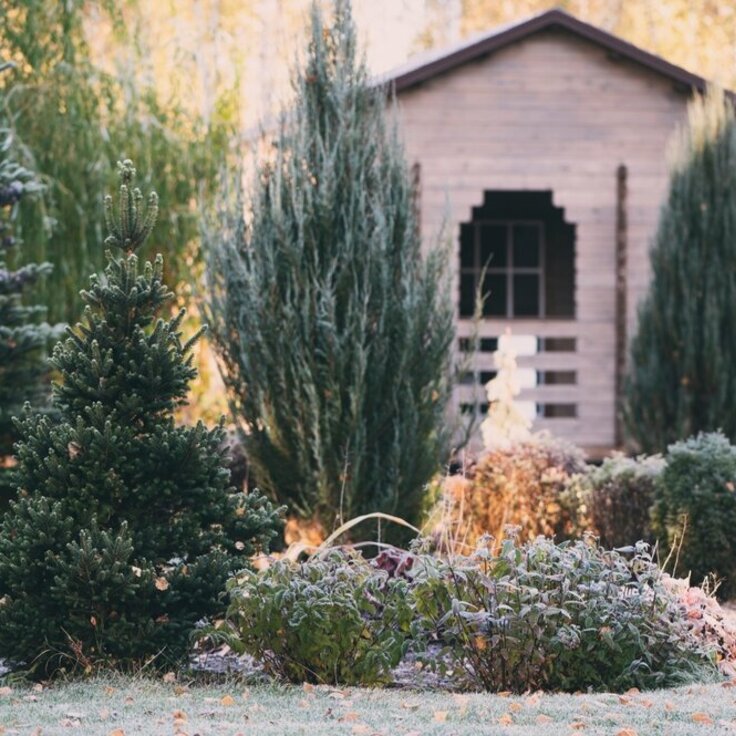
Most of us aren't working with rolling lawns and a summerhouse tucked in the corner. A lot of Irish gardens, are somewhere between a decent-sized patio and a postage stamp with a bit of grass, and it's easy to assume there's simply not enough space to do much with it. That's not really true. Small gardens respond really well to a handful of deliberate choices, and you don't need to rip the whole thing up to get there.
Work Out What You're Actually Losing Space To
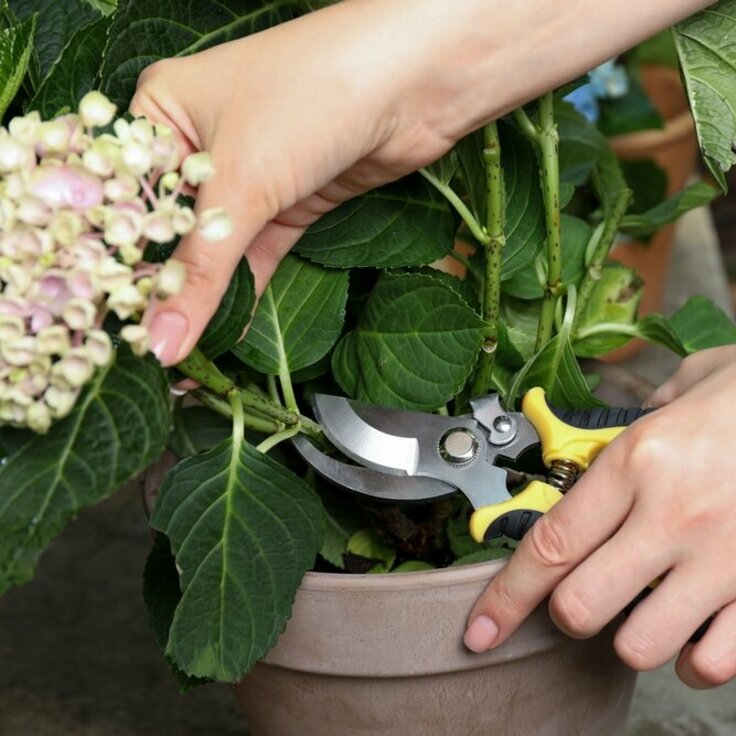
Before buying a single plant, it's worth standing at the back door and having an honest look at what's eating into the space. Nine times out of ten it's an overgrown shrub nobody's touched in years, a shed that's twice the size it needs to be, or a bin storage area that's been allowed to sprawl. Cutting back or removing even one of these often frees up more usable space than you'd think, and it costs nothing beyond a Saturday afternoon and a pair of secateurs.
It's also worth being honest about the bits of the garden you never use. A patch of lawn too small to sit on and too awkward to mow properly is a prime candidate for gravel, paving, or a raised bed instead.
Use Height, Not Just Floor Space
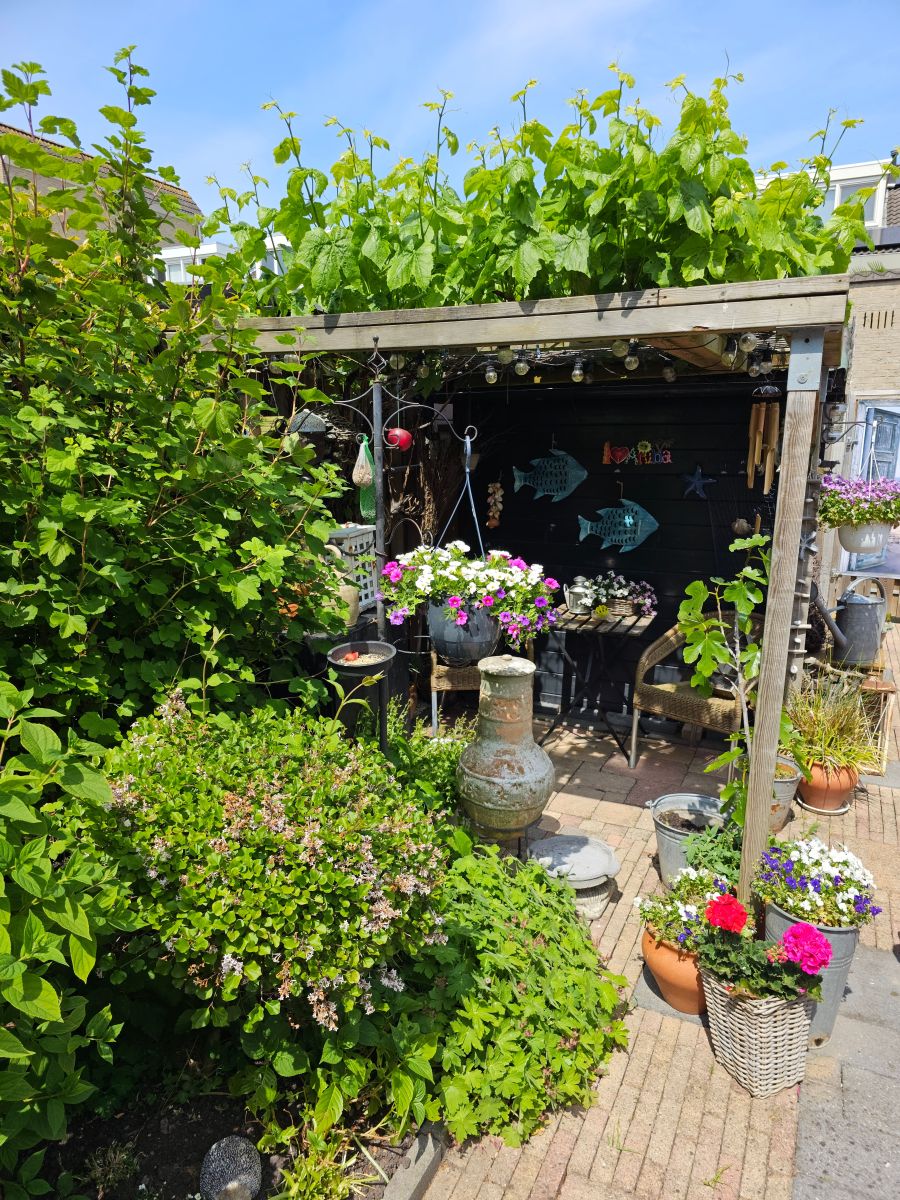
Small gardens get read as small largely because everything sits at the same low level. Once you start adding height, with a trellis against a fence, a tall obelisk with a climbing rose or clematis, or simply taller planting at the back of a border, the eye is drawn upward and the space reads as far more generous than it actually is. Vertical planters and wall-mounted troughs do a similar job on a patio or courtyard where there's barely any bed space to speak of.
Climbers in particular punch well above their weight in a small plot. A star jasmine or clematis trained up a wall fills a huge amount of visual space while taking up almost none on the ground, and by midsummer it can be the best-looking thing in the garden.
Think About Boundaries Early, Not Last
The fence or wall round a small garden does a lot more visual work than people give it credit for, simply because in a compact space you're looking at it constantly. A tired, grey, leaning panel fence will drag the whole garden down no matter how nicely you've planted in front of it. Swapping to good quality timber fence panels, and giving them a coat of a dark stain like charcoal or slate rather than the standard orange-brown treated look, makes an enormous difference and is a job most people can manage over a weekend with a helper and a decent set of post supports.
Dark fencing is worth considering even if it sounds counterintuitive for a small space. Rather than boxing the garden in, a near-black or charcoal boundary tends to recede visually, letting the planting in front of it do the talking.
Keep the Palette Simple
It's tempting in a small garden to want one of everything, but a mix of too many plant varieties, pot styles, and materials tends to make a compact space feel busier and smaller than it is. Picking two or three key plants and repeating them, alongside one consistent pot colour or material, gives a small garden a much calmer, more considered look. The same goes for hard landscaping; one paving material used throughout reads far better than three different textures competing for attention in twenty square metres.
Colour matters here too. A garden flowering in five clashing shades at once can look chaotic even when every individual plant is lovely, while one built round two or three complementary colours, whites and purples, or pinks and silvers, looks deliberate with far less variety.
Make Storage Work Harder
Bins, tools, and the kids' outdoor toys have a way of taking over a small garden if there isn't a proper home for them. A slim storage bench doubles as seating and hides everything from footballs to watering cans, and it's a far better use of space than a freestanding shed if the garden's genuinely tight. Built-in storage under a raised deck, if you've got one, does the same job without eating into anything you'd otherwise be using.
Use Lighting to Extend the Evening
A small garden that looks great at midday can feel completely dead once the sun goes down, which is a shame given that a cosy backyard can be the perfect place to spend a dry evening. Solar stake lights along a border, or a couple of warm festoon lights strung across a patio, cost very little and make a garden usable for hours longer than it otherwise would be. It's one of the cheapest changes on this list and consistently one of the most noticeable.
Know When to Call In Help
Levelling ground, laying proper drainage, or building a raised deck are jobs worth getting a professional in for, since getting them wrong is expensive to undo. But the vast majority of what makes a small garden feel considered rather than chaotic comes down to the smaller decisions: what you cut back, what you paint or stain, what height you plant at, and how honestly you look at the space you've actually got. Most small gardens don't need a full redesign to feel like somewhere you actually want to spend time. They just need someone to stop treating them like a small version of a big garden, and start designing for what they are.